Short answer
Scrap copper in Sydney is paid per kilogram at the current market rate, which moves with the global copper price, the Australian dollar and your copper's grade. Bright and shiny wire is worth the most, then clean pipe and busbar, then mixed copper, with insulated cable and equipment below. For today's rate, send a photo and a rough weight for a quote.
How scrap copper prices work in Sydney
Every copper price in Sydney starts with the global market. The usual benchmark is the LME (London Metal Exchange) copper price, set in US dollars and moving through each trading day. Recyclers, and the smelters and traders they sell to, convert that into Australian dollars and adjust it for grade and the cost of getting the metal ready to melt.
So there is no single copper price per kg. Bright and shiny wire, clean pipe, mixed copper and each grade of insulated cable all have their own rate, and the gaps between them shift as the market moves. What you are paid depends on:
- The global copper price, which can change from one day to the next
- The Australian dollar against the US dollar
- The grade of your copper and how well it is sorted
- What is still attached: solder, brass fittings, insulation, paint or steel
Online price lists date quickly and cannot see your copper, so the useful number is a quote on what you actually have. For steel, aluminium and other metals, see our guide to scrap metal prices in Sydney.
Copper scrap grades explained
Copper is graded by how pure it is and how much work it needs before melting. These are the grades we sort into on the day.
| Grade | What it looks like | Where it comes from | How to keep it in grade |
|---|---|---|---|
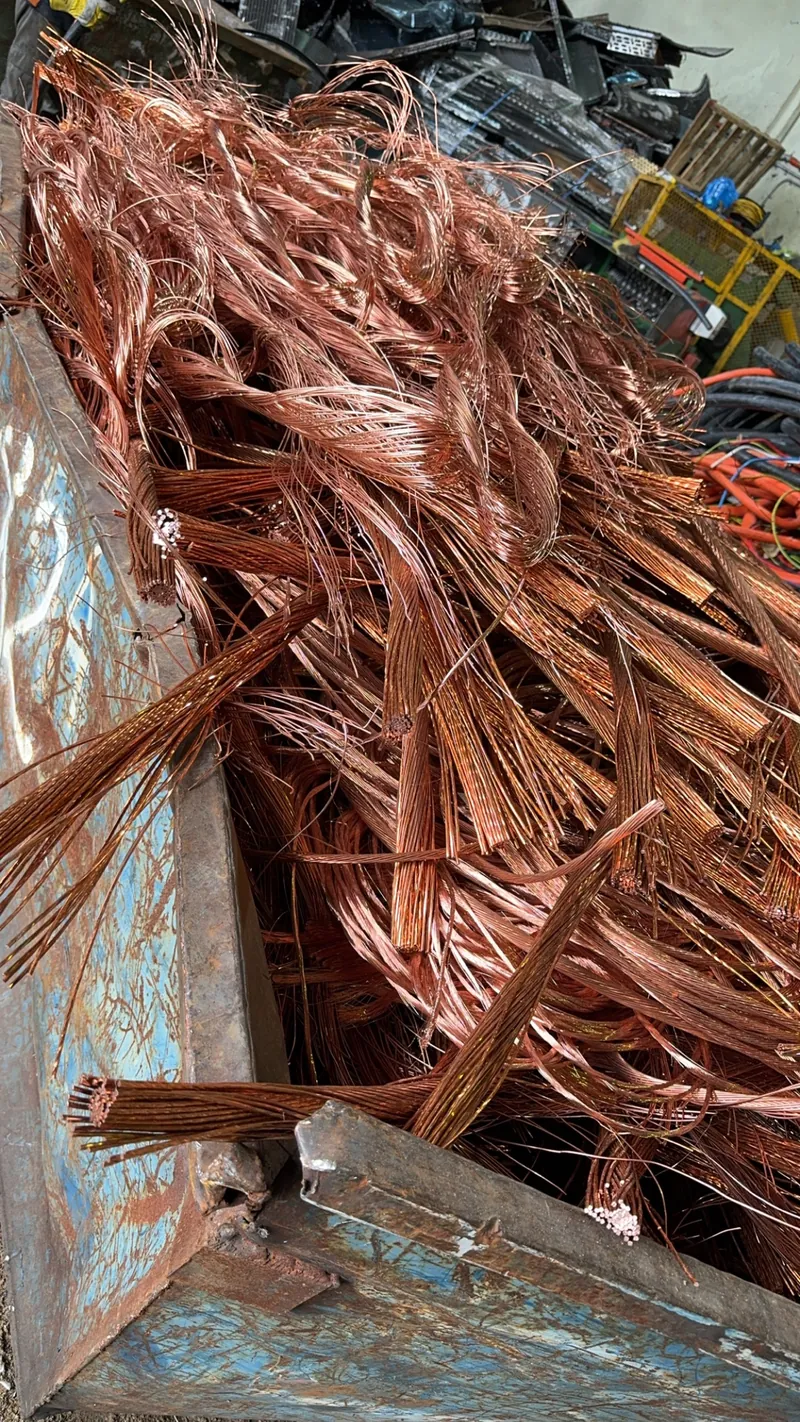
| Bright and shiny | Bare, uncoated wire with its bright colour and no tarnish, solder or insulation | Stripped heavy power cable | Bag it dry and alone; keep thin, tinned or burnt wire out |
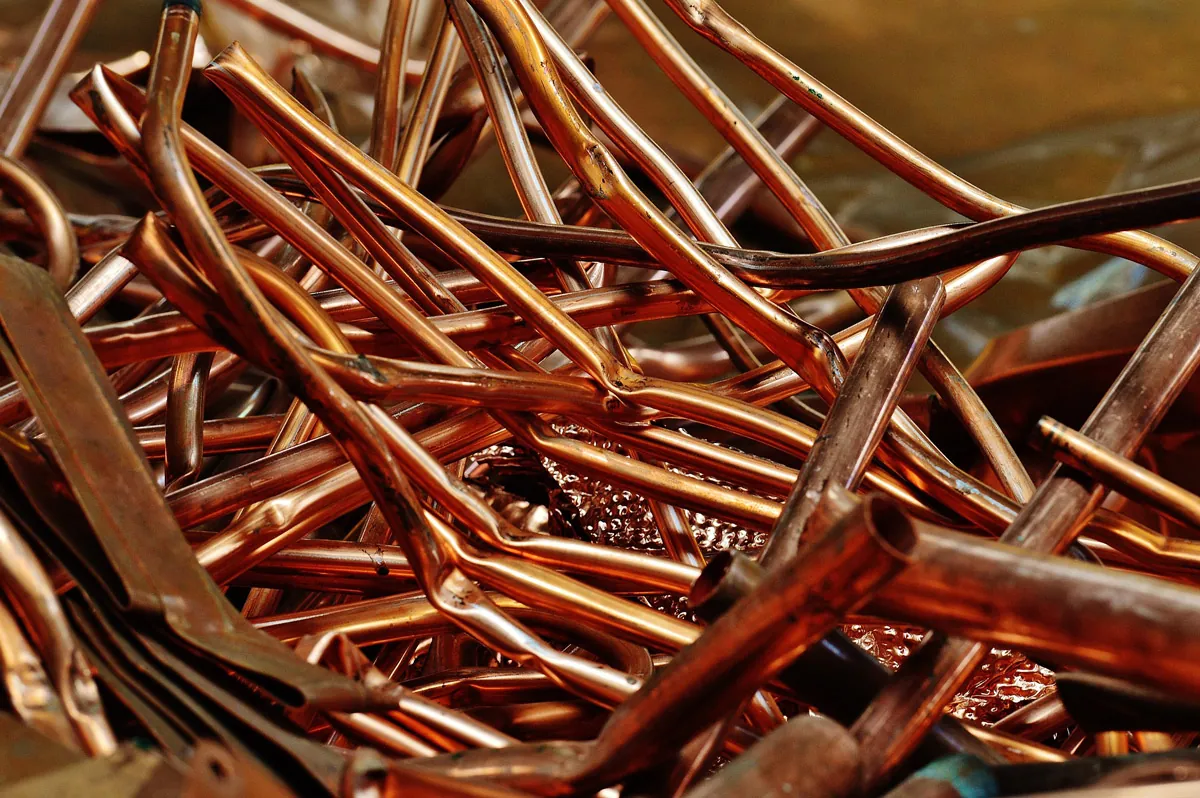
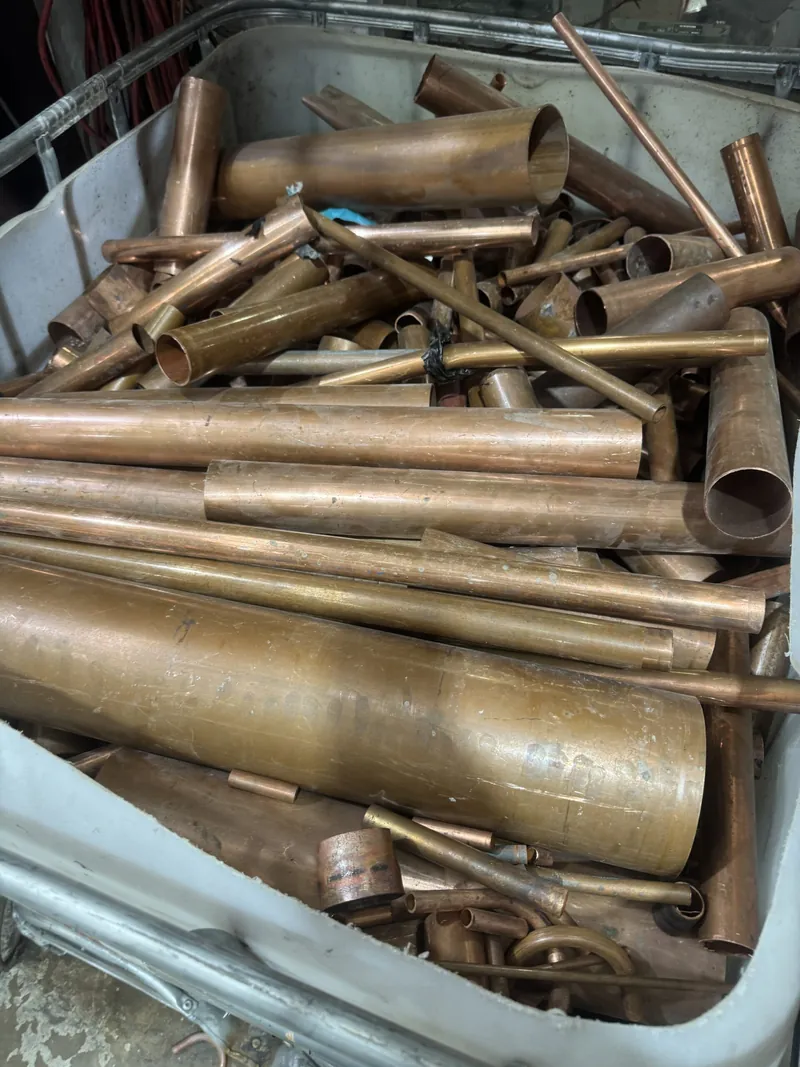
| Clean copper | Pipe, tube, busbar and offcuts with nothing attached; light tarnish is fine | Plumbing, gas fitting, switchboard and refrigeration work | Cut off brass fittings and solder joints; remove lagging and clips |
| Mixed or dirty | Copper with solder, paint, plaster, fittings or heavy corrosion | Renovations, demolition and old plumbing | Cut back what you can quickly |
| Insulated cable | Power cable, building wire, flex and data cable, graded high, mixed or low by copper content | Fit-outs, rewires, stripouts and switchroom work | Keep heavy cable apart from thin wire; cut off plugs |
| Copper in equipment | Motors, compressors, aircon coils and radiators | HVAC changeovers, workshops and plant replacements | Leave units whole; aircon needs refrigerant recovery first |
Grade names vary between yards. At A-K you see which grade each pile goes into before it is weighed.
Bright and shiny copper
Bright and shiny (often called bare bright) is clean, unalloyed wire stripped of its insulation. It falls out of grade easily: wire left in the rain until it browns, burnt wire, silver tinned wire and enamelled winding wire from motors are all graded lower. Keep stripped wire in a dry, covered bin with nothing else in it.
Clean copper and copper pipe scrap
Copper pipe scrap is clean once brass valves, compression fittings, soldered joints, saddles and foam lagging are off. A hacksaw or pipe cutter just behind each fitting usually does it, and the brass you cut off sells as its own grade. Painted or tar-coated copper stays mixed; that is rarely worth fixing.
Which copper grades are worth the most?
Rates change, but the order of the grades is fairly stable. From highest value to lowest, copper usually ranks like this on our scale:
- Bright and shiny stripped wire
- Clean copper pipe, tube and busbar
- Mixed or dirty copper
- High grade insulated cable with a heavy conductor
- Mixed insulated wire from fit-outs and rewires
- Low grade cable such as data cable and appliance leads
- Motors, compressors and other equipment where much of the weight is steel
Each step down means more stripping, separating or smelting before the copper can be reused. That is also why a mixed bin is usually paid at its lowest grade: good copper buried under cable offcuts cannot be weighed on its own.
Brass is off the list because it is a different metal, an alloy of copper and zinc, usually paid below clean copper. Aircon coils and copper radiators are graded on their own, depending on how much copper they carry against aluminium and steel.
Copper wire scrap prices: insulated cable vs bare copper
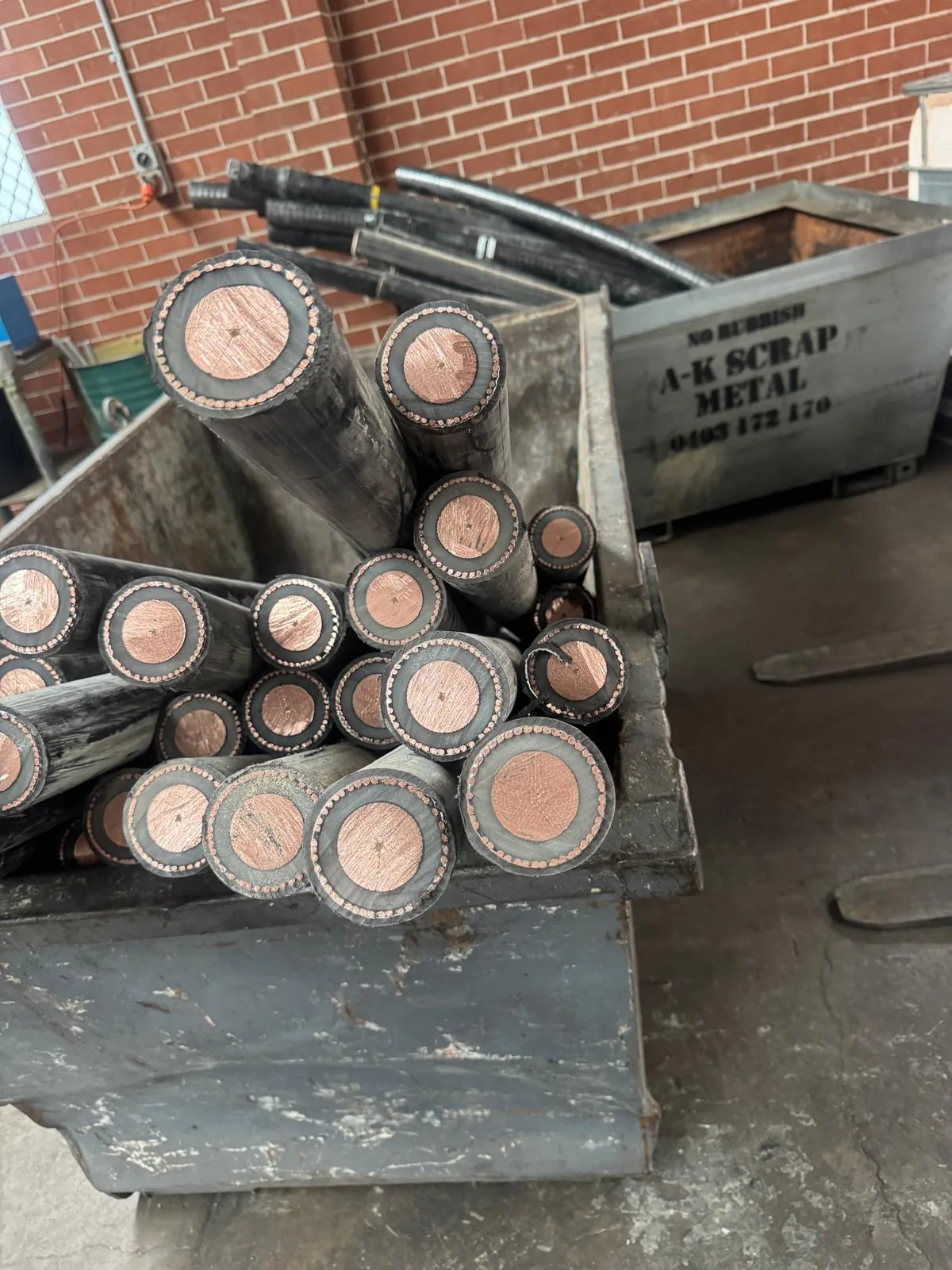
Insulated cable is paid on how much copper it gives back once the plastic is removed. Heavy single-core power cable can be mostly copper by weight, while data cable is mostly plastic around a few thin pairs, so two bags of the same weight can be worth very different amounts.
Stripping lifts the rate per kilo, but only the copper earns it; the plastic you remove was never paid for. It can pay on heavy power cable. On thin building wire, flex and data cable it rarely does. Our cable recycling page covers the insulated grades in detail.
How to strip copper cable safely, and why you never burn it
If you strip heavy cable yourself, the main risk is a blade slipping off the sheath and into a hand or leg.
- Only strip cable that is already disconnected and removed. If it is still in a wall or connected to a board, leave it to an electrician.
- Clamp the cable in a vice so it cannot roll or spring.
- Wear cut-resistant gloves and eye protection, and cut away from your body.
- Use a cable stripping tool or hook-blade knife and score along the sheath, not into the copper.
- Bag the bare copper straight away, dry and on its own.
Never burn cable to remove the insulation. Burning PVC and rubber gives off toxic smoke, is a fire risk and damages the copper. Burnt wire comes out blackened and brittle, so it is usually graded down rather than paid as bright and shiny. Bring the cable as it is instead.
Copper inside motors, compressors, aircon coils and radiators
Plenty of copper arrives inside other things. These items are bought whole and graded by type, so there is usually no reason to take them apart.
- Electric motors: copper windings on a steel core. Cutting out windings is slow and the enamelled wire is not bright and shiny, so bring them whole, from e-bike hub motors to industrial motors.
- Compressors: sealed steel shells with a copper-wound motor inside. Bring them from systems that have had their refrigerant recovered, and do not cut them open.
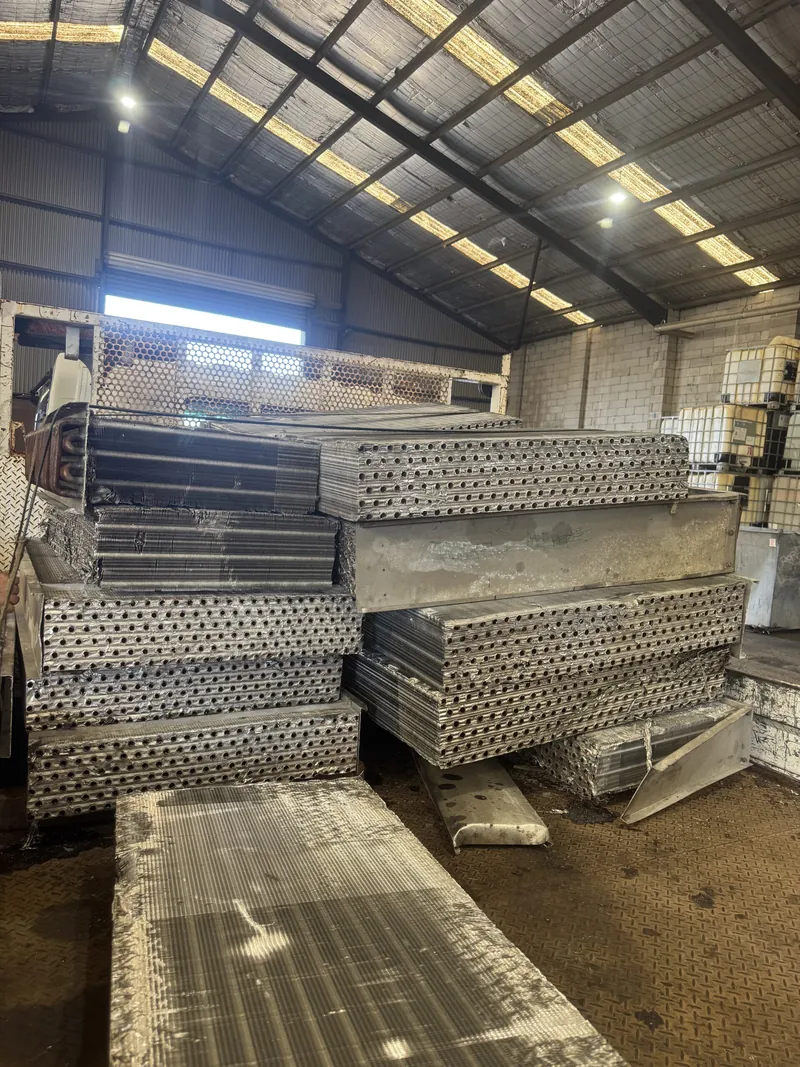
- Aircon coils: copper tube with aluminium fins pressed on, graded on their own because the metals are hard to separate.
- Radiators: older copper and brass radiators are one grade; many modern radiators are aluminium with plastic tanks and grade differently.
Never cut the pipework on an air conditioner that may still hold refrigerant. Whole units need certified refrigerant recovery first, which is part of our aircon recycling service.
How to tell copper from brass
Copper and brass end up in the same bucket all the time on plumbing jobs. They are paid at different rates, and a file and a magnet are enough to split them.
- Colour: file through the surface. Copper shows reddish orange to salmon pink; brass shows yellow to gold.
- Use: pipe and tube are usually copper. Valves, tap bodies, unions and compression fittings are usually brass.
- Hardness: brass is harder. A file bites into copper easily.
- Plating: chrome-plated taps are usually brass underneath. Scratch an unseen spot.
- Magnet: neither metal is magnetic. If a magnet sticks, it is steel underneath, such as a copper-coated earth stake, and belongs in neither pile.
How A-K grades and weighs your copper
We have been a family-run metal buyer since 2003, and the process is the same for a bucket of offcuts or a truck of cable.
- We sort the load into grades with you, checking colour, cut ends and anything still attached.
- If a piece could go either way, we explain the grade and whether a quick cut would lift it.
- Each grade is weighed on its own, and you can photograph the reading or ask us to.
- You are paid on the spot for each grade at the current market rate.
Pickups are free for copper anywhere in Sydney, with the same weighing on site. Or bring it to 18 Barry Ave, Mortdale, Monday to Friday 7am to 4pm or Saturday 7am to 2pm, and we help you unload.
How to sell copper and get today's price
The quickest way to a real number is a quote on your copper:
- Photograph the copper close up, including any cable ends, plus a wider shot showing how much there is.
- Text the photos to 0403 172 170 or email admin@akscrapmetal.com.au, with a rough quantity and your suburb.
- We reply with the grade and a quote at the current rate. The final amount comes from the scale.
- Book a pickup or drop it at the yard. Same day collection is possible in most cases, depending on location and volume.
Selling other metals too? Our guide to selling scrap metal in Sydney covers sorting a mixed load and booking a pickup.
Send a photo for a quote, then we collect anywhere in Sydney, weigh it in front of you and pay on the spot.

About the author
The A-K Scrap Metal yard teamFamily-run metal recyclers at 18 Barry Ave, Mortdale since 2003. We grade, weigh and buy scrap metal at our yard and on job sites across Sydney every week, and we write these guides from what we see on the scale. Metal prices change with the markets, so we never publish rates: call 0403 172 170 or send us a photo for today's price.
Updated 13 November 2026 · About A-K Scrap Metal